Eradicating antisemitism begins with education. That’s why we engage teachers and students through workshops and programs that incorporate the Holocaust and address the real-world impact of antisemitism in today’s society.
Our efforts include community-wide and in-school programming, Holocaust speakers and comprehensive resources designed for individuals of all ages and backgrounds.
Antisemitism often stems from a lack of knowledge and personal connections, which often leads to misperceptions. By putting a human face on Judaism, we can build understanding and develop friendships that allow us to begin to counter hate.
Through the Student to Student program, teen leaders visit local high schools to share their stories about what it means to be Jewish. They talk about Jewish traditions, culture and holidays, helping dismantle stereotypes and build relationships.
The Student to Student program is free to schools. It is designed for classroom settings so that students can ask questions in an open dialogue and safe space. We work with teachers and administrators to enhance the classroom curriculum.
All presentations are held during classroom period or another time specified by the teacher. Our teen ambassadors comprise of teams of usually four students. The students will share their personal narratives, what it’s like to be a Jewish teen and highlight the diversity of the Jewish community. Students may bring props to increase awareness of topics covered (such as challah bread).
Want to join our Student to Student program as a teen ambassador? Join other teenagers and help change perceptions of the Jewish community. Together, you will make a big impact by breaking down cultural barriers, connecting with other Jewish peers and showing your leadership skills. Share your Jewish journey as we help counter antisemitism in schools and help shape students’ views in a positive way.
Jewish students attending private and public schools in Baltimore who will be in 11th – 12th grade during the 2026-27 school year are eligible to apply. Students do not have to be affiliated with a Jewish organization, congregation or denomination.
This program makes a big impact with a minimal time commitment from student participants. Students will meet for a one-day orientation session (specifics will be shared upon acceptance into the program). We will also be having regularly scheduled social and educational gatherings throughout the semester to increase our sense of community and our knowledge base around the topics we present about (dates for these scheduled programs will be shared at orientation). Students can expect to leave school to present at least 1-3 times per semester. All time spent on the Student To Student program qualifies for community service hours.
Each presentation is given by a group of three to five students. Each group will always be accompanied by an Associated professional and/or volunteer. Students have the ability to sign up for presentations depending on their schedules.
Presenters discuss a range of topics, including any or all of the following:
Groups bring a variety of “props” into the classroom that help make their presentations come alive for their peers, including challah, a shofar, Shabbat candlesticks, personal pieces of Judaica and more.
Students will meet for an orientation session. Materials will be provided and support given to help the students prepare. Because these presentations reflect students’ personal experiences, they will come into the program with much of the expertise they need to give effective presentations. You will practice as a group to ensure you feel confident in your presentation skills and material you are presenting about.
Presentations tend to take place during school hours. Presenting students will need to leave school in order to present. Excused absence letters are provided to students from the program director.
Student to Student is the Jewish Federations of North America’s national signature program, with proven success for building understanding between communities, combating misinformation, fighting antisemitism and making Judaism more familiar to students across the country.
We offer on-site, virtual and off-site field trips for Maryland schools with topics that encourage religious and cultural tolerance and discourage antisemitism and bigotry. We also offer field trips on immigration, Holocaust history and an introduction to Jewish life. These are trips are through the Jewish Museum of Maryland.
The Jewish Library of Baltimore, housed at The Associated’s Headquarters inside the Park Heights JCC, offers significant Holocaust resources, from children’s books to adult texts. Browse The Jewish Library of Baltimore’s extensive collection in-person or via their online catalogue.

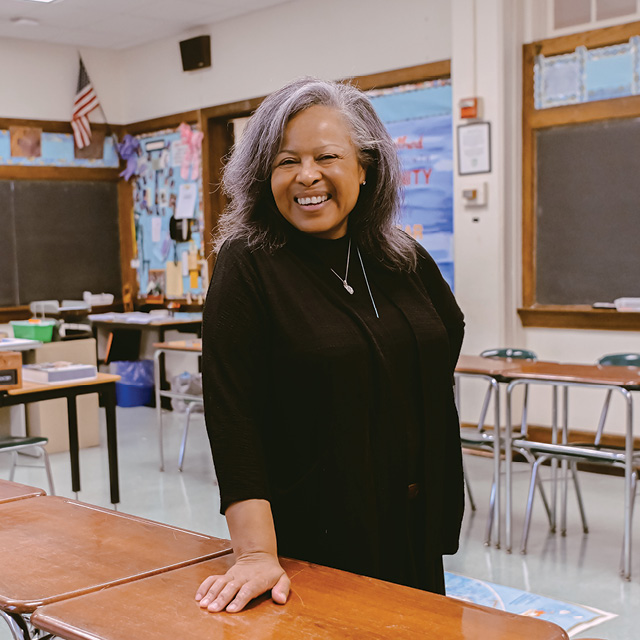
Catholic High School teacher, Natalie Petro, educates her students about the Holocaust, antisemitism and respect.
Read More
Have you experienced or observed an antisemitic incident? The Associated, The Baltimore Jewish Council and the Anti-Defamation League (ADL) want to know. Anyone who has experienced or witnessed verbal comments, antisemitic symbols or other forms of antisemitism are encouraged to report the incident.
You can play an important role in our mission to counter antisemitism and hate.
Sign up for The Associated’s Newsletters to stay up to date on the important work the Center for Countering Antisemitism and Hate is doing and learn how you can help make a difference.
Jewish students have important legal protections under federal law. Title VI of the Civil Rights Act of 1964 (“Title VI”) protects Jewish students in K-12 schools and universities from discrimination and harassment based on their Jewish identity.
Title VI prohibits discrimination based on race, color and national origin, which includes shared ancestry and ethnicity, in programs receiving federal funding. It is important to understand that Jews receive Title VI protections based on their shared ancestry and ethnicity, not based on their religious identity or practices.
Under Title VI, harassment creates a “hostile environment” when the harassment is so severe or pervasive that it limits a student’s ability to participate in or benefit from their educational program.
An institution can be found liable for violating Title VI if it had: 1) notice of the hostile environment and (2) failed to take prompt and effective steps reasonably calculated to end the harassment, eliminate any hostile environment and its effects, and prevent the harassment from recurring.
Document everything. Take photos, screenshots and videos where possible. Keep a log of what happened with dates, names and details. Promptly notify the school or university in writing, copying high-level administrators. Consider seeking legal assistance.
Federal agencies such as the U.S. Department of Education’s Office for Civil Rights (“OCR”) that are charged with enforcing Title VI are required to consider the International Holocaust Remembrance Alliance’s Definition of antisemitism and its contemporary examples when evaluating complaints of antisemitism.
Complaints to OCR must be filed within 180 days of the discriminatory act. Deadlines for filing Title VI cases in federal court can vary by jurisdiction.
The Institute is committed to protecting Jewish civil rights, and provides legal assistance to those who have experienced antisemitic discrimination and harassment. Visit jcivilrights.org to learn more.
This resource is for informational purposes only and does not constitute legal advice. For guidance specific to your situation, contact a qualified civil rights attorney.