A Fresh Look at Charitable Planning:
Spring Strategies for Advisors

Spring offers a natural moment to revisit and refine financial strategies. For advisors, it’s also an ideal time to reengage clients in thoughtful conversations about charitable giving, not as a year-end task, but as an integrated part of their broader financial and tax planning.
Rather than anchoring decisions to a single deadline, this season creates space to reflect on the past year and identify opportunities to align clients’ philanthropic goals with evolving tax considerations in the year ahead.
Shifting the Conversation to Year-Round Strategy
For many clients, charitable giving is still approached reactively. Advisors are uniquely positioned to reframe it as a proactive, values-driven component of a comprehensive financial plan.
Spring is an effective time to initiate or revisit these discussions:
- Did last year’s giving align with the client’s broader financial goals?
- Are there opportunities to improve tax efficiency through timing or structure?
- How can charitable strategies be better integrated with retirement, estate, and legacy planning?
Revisiting Required Minimum Distributions (RMDs)
For clients aged 73 and older, Required Minimum Distributions (RMDs) remain a key consideration for planning. These mandatory withdrawals can create tax implications, but they also present a strategic opportunity for charitable giving.
Qualified charitable distributions (QCDs) continue to be an effective tool, allowing clients to direct up to $111,000 annually from an IRA to charity ($222,000 for couples). For charitably inclined clients, this approach can be seamlessly incorporated into annual planning discussions.
Positioning QCDs within your advisory conversations can help clients:
- Manage Tax Exposure: QCDs can satisfy RMD obligations while reducing adjusted gross income.
- Simplify Giving: Direct transfers to qualified charities streamline both execution and reporting.
- Enhance Impact: Clients can support priority causes in a way that is both meaningful and tax-efficient.
Additionally, the expanded QCD remains in effect to allow for a one-time $55,000 distribution to charities through charitable plans that pay you income, including Charitable Gift Annuities, Charitable Remainder Unitrusts, and Charitable Remainder Annuity Trusts.
Leveraging Donor Advised Funds in Long-Term Planning
Donor Advised Funds (DAFs) remain a versatile solution for clients seeking flexibility and structure in their giving. As part of a broader planning strategy, DAFs allow clients to separate the timing of a tax deduction from the timing of charitable distributions.
For advisors, DAFs create opportunities to:
- Align Giving with Income Events: Clients can contribute during high-income years while maintaining flexibility in grantmaking.
- Incorporate Investment Strategy: Assets within a DAF can be invested, potentially increasing long-term charitable capacity.
- Facilitate Family Engagement: DAFs can serve as a platform for multigenerational involvement in philanthropy.
Planning Within the Current Tax Environment
Recent tax law changes continue to influence how and when charitable strategies are most effective. Proactive conversations can help clients take full advantage of available opportunities:
- Standard Deduction Considerations: With fewer clients itemizing, charitable planning may require more intentional structuring to achieve tax efficiency.
- Bunching Strategies: Consolidating multiple years of contributions into a single tax year may help clients exceed the standard deduction threshold. A DAF can be a useful tool when considering bunching of gifts.
A More Intentional Approach to Giving
By encouraging clients to pause, reflect, and plan ahead, advisors can help them move beyond transactional giving toward a more thoughtful and strategic approach. In doing so, you not only enhance the tax efficiency of your clients’ plans but also deepen engagement around what matters most to them.
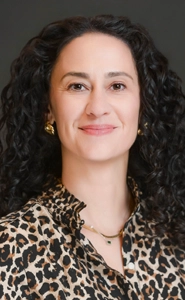
If you would like to explore how these strategies can support your client conversations, we are here as a resource and partner in building thoughtful, effective philanthropic plans. Contact Jackie Yahr at 410-369-9248 or jyahr@associated.org for help on how to maximize the financial and charitable benefits of any such planning strategies available to your clients.
This is for informational purposes only and should not be construed as legal, tax or financial advice. When considering gift planning strategies, your clients should always consult with their own legal and tax advisors.
Subscribe to our newsletter
The Associated is a home for everyone in the Baltimore Jewish community. We offer several email lists to help people find a community, engage with their peers and support Jewish journeys around the world.
Join Our Mailing List




Add Impact to Your Inbox
Sign up for our newsletter
Subscribe to our newsletter
The Associated is a home for everyone in the Baltimore Jewish community. We offer several email lists to help people find a community, engage with their peers and support Jewish journeys around the world.
Join Our Mailing List


 Please Wait while we loading your video.