Heshvan: The Month of Enoughness
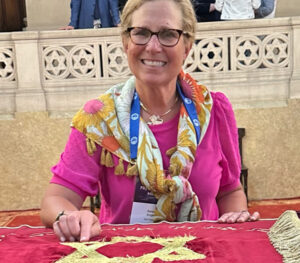
By Rabbi Nina Beth Cardin, Chair of the Baltimore Environmental Sustainability Network

Ordinary Time
After a month of abundance, with Rosh Hashanah tables overflowing and the holiday of Sukkot marking the gift of a bountiful harvest, we enter the quiet, holiday-free month of Heshvan.
Which, frankly, is just fine with me. We can use the downtime, the ordinary time, to acknowledge that for all the joy and hubbub and excesses of the holidays, life lived simply is a blessing too.
Heshvan is the uncomplicated month of enoughness. It is the month that reminds us of the joys of simplicity, of life’s everyday goodness and, for those of us in the Appalachian Piedmont (which includes all of us in Baltimore), of the explosive beauty of nature in the fall. Which in turn reminds us of earth’s awesomeness and how our behavior is threatening its wellbeing.
Heshvan’s simplicity reminds us that we can do better.
There is No Waste in Nature
One of the most basic rules essential for the earth’s flourishing is this: nature knows no waste. All of nature’s creations: plants, animals, seeds, insects, food, rain, air and soil, all get reused, recycled and revived, in the literal sense of being brought to life again.
Modernity has lost sight of this fundamental law. Instead, we create things that cannot be reused, reclaimed, dismantled and used again. Rather, we create things that persist for millennia, long after our century-bound lifetimes, long after they are useful, so they end up polluting our air, water, soil and even our bodies.
Heshvan, a month without holidays, offers us the space and time to begin the hard work of making this year better.
Reducing Our Use of Plastic
We can begin by reducing our use of plastic.
Fifty percent of all plastic is used only once, often just for minutes, and then thrown “away”. As plastic breaks down, it forms smaller and smaller particles that not only enter our oceans, waterways and land but our bodies as well. It can be found in our lungs, bloodstreams, babies and even our brains.
Heshvan is a great time to begin to reduce our plastic consumption.
- Avoid plastic packaging as much as possible.
Choose products in cardboard packaging, seek out foods with minimal-to-no plastic packaging and buy unpackaged produce when available (use reusable mesh bags for your fruits and vegetables). Replace your plastic containers at home with glass or metal, slowly transitioning your kitchen away from plastic.
- Support Waste Reduction Legislation
Get involved in waste reduction legislation this upcoming Maryland General Assembly session.
Support the Bottle Bill when it comes up again, incentivizing the return and reuse of bottles. Support enforceable Extended Producer Responsibility legislation that shifts the responsibility and cost of recycling back onto manufacturers and product designers, rather than leaving it solely to consumers and government. Stay Connected and Take Action
- Stay Informed
Sign up for The Associated’s Social Justice newsletter here to stay up to date on environmental communications and volunteer opportunities.
The Baltimore Environmental Sustainability Network is an initiative of The Associated: Jewish Federation of Baltimore, in partnership with Adamah.
Subscribe to our newsletter
The Associated is a home for everyone in the Baltimore Jewish community. We offer several email lists to help people find a community, engage with their peers and support Jewish journeys around the world.
Join Our Mailing List





Add Impact to Your Inbox
Sign up for our newsletter
Subscribe to our newsletter
The Associated is a home for everyone in the Baltimore Jewish community. We offer several email lists to help people find a community, engage with their peers and support Jewish journeys around the world.
Join Our Mailing List


 Please Wait while we loading your video.